
Wyoming’s Bighorn Basin: From Ancient Seas to Modern Wildlife
Wyoming’s Bighorn Basin is a place where natural history unfolds across hundreds of millions of years, telling the story of vanished oceans, dinosaurs, early mammals, Ice Age transformations, and the diverse ecosystems that define the region today. According to the Wyoming State Geological Survey’s detailed overview of the basin’s geologic framework, the Bighorn Basin began as a marine environment during much of the Paleozoic Era, when warm shallow seas covered the region and deposited limestone, dolomite, and fossil rich sediments. These ancient waters left behind evidence of brachiopods, corals, trilobites, and other marine life still visible in exposed formations throughout the basin.
By the Mesozoic Era, especially during the Jurassic and Cretaceous periods, the basin transformed into a shifting mosaic of rivers, floodplains, forests, and inland seaways. The Red Gulch Dinosaur Tracksite page documents how dinosaurs once roamed this landscape, leaving behind fossilized tracks and remains that reveal Wyoming’s prehistoric wildlife. The basin’s sedimentary layers preserve evidence of large dinosaurs, crocodilian relatives, and ancient plant communities that thrived in warm, humid conditions.
One of the Bighorn Basin’s most globally significant chapters came after the extinction of the dinosaurs. Research published by the University of Michigan’s Bighorn Basin Paleontology Project explains that Paleocene and Eocene rocks in the basin contain one of the world’s most complete fossil records of mammalian evolution. Here, scientists have uncovered fossils of early primates, tiny horses, and countless mammal species adapting to a changing climate, particularly during the Paleocene-Eocene Thermal Maximum around 56 million years ago, one of Earth’s most dramatic warming events.
As mountain building during the Laramide Orogeny uplifted the surrounding Bighorn, Owl Creek, and Absaroka ranges, habitats shifted again. Forests, grasslands, and sagebrush ecosystems emerged as erosion carved canyons and badlands. The Bighorn Canyon National Recreation Area’s natural history resources describe how Ice Age climate fluctuations later shaped migration routes and habitats for bison, pronghorn, bighorn sheep, and predators.
Today, the Bighorn Basin is home to an extraordinary range of wildlife including wild horses, mule deer, black bears, mountain lions, sage grouse, and some of Wyoming’s most iconic bighorn sheep populations. The Wyoming Game and Fish Department’s basin region resources highlight how the basin’s sagebrush plains, river corridors, badlands, and alpine forests support both resident and migratory species.
From coral reefs beneath ancient seas to dinosaur trackways, from the rise of mammals to modern sagebrush prairies, the Bighorn Basin’s natural history is a sweeping story of resilience, adaptation, and transformation, one of the richest environmental chronicles in the American West.
Explore the Basin’s Natural History at These Places
- The Colby Mammoth Site
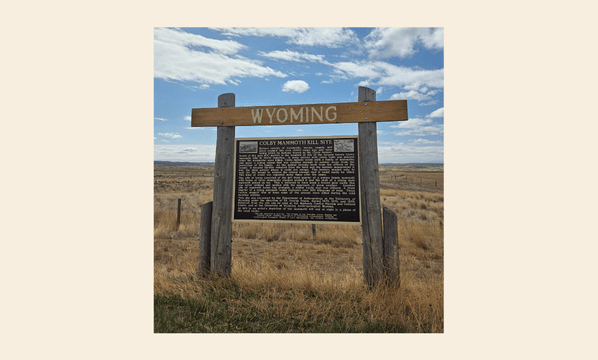 Ice Age Giants Buried in the Wyoming Badlands Just north of Worland, Wyoming, in the heart of the Bighorn Basin, lies one of North America’s most significant Ice Age paleontological… Read more: The Colby Mammoth Site

