
Just a few minutes north of Worland, the Duck Swamp Environmental Education Area offers an easy walk around one of the Bighorn Basin’s distinctive wetland habitats. Its short interpretive loop, wildlife-viewing opportunities and developed picnic area make it an excellent outing for families, birdwatchers and anyone looking for a relaxed hike close to town.
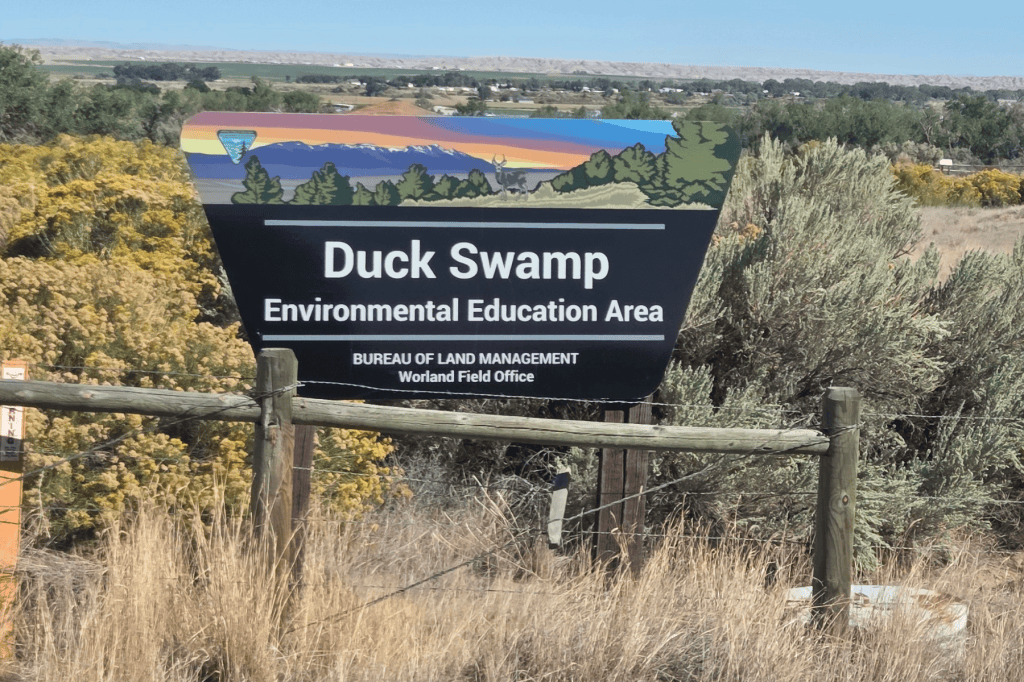
Trail at a Glance
- Location: Approximately three miles north of Worland, Wyoming
- Trail length: About 1 mile
- Route type: Loop
- Difficulty: Easy
- Elevation gain: Minimal
- Estimated time: 30–60 minutes
- Land manager: Bureau of Land Management
- Fee: None
- Best uses: Hiking, birdwatching, photography and environmental education
- Facilities: Restrooms, drinking water, parking, covered picnic tables
See it on AllTrails https://www.alltrails.com/explore/trail/us/wyoming/jim-bridger-historical-trail–2
About Duck Swamp
Despite its name, Duck Swamp is not a muddy pond. The 81-acre natural area protects an oxbow lake and surrounding marsh created by a former channel of the Bighorn River. The trail itself consists of two paved loops which makes it very accessible, and multiple dirt trails that branch off of the paved path.
Oxbow lakes form when a winding river changes course and leaves part of its old channel behind. The resulting wetlands can provide valuable habitat in otherwise dry country. At Duck Swamp, the contrast between the marsh and the Bighorn Basin’s surrounding sagebrush landscape makes the area especially interesting.
The site’s interpretive signs introduce visitors to the wetland ecosystem and the wildlife that depends on it.
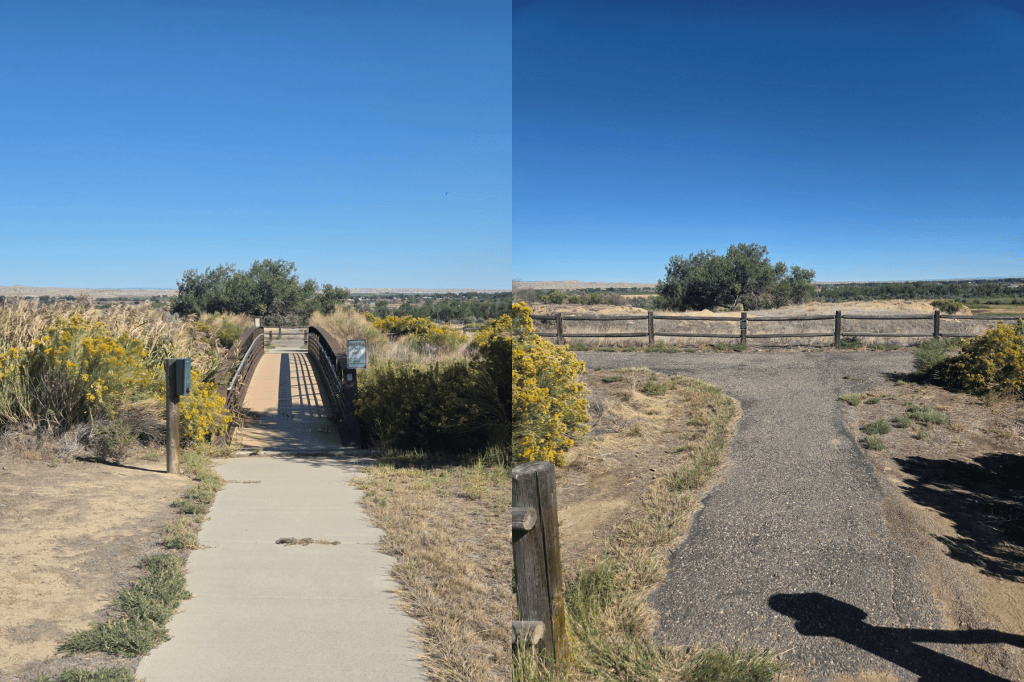
Hiking the Interpretive Loop
The approximately one-mile loop begins near the developed parking and picnic area. The route follows mostly level terrain overlooking the wetland, making this more of a leisurely nature walk than a traditional backcountry hike.
Take time to stop at the interpretive displays and scan the water, reeds, trees and open sky. Wildlife may not always be immediately visible, but patient visitors often notice movement or hear bird calls coming from the vegetation.
The loop can generally be completed in about half an hour. Birdwatchers and photographers may want to allow an hour or more.
Because the trail is short and close to Worland, Duck Swamp is a convenient option for young children, beginning hikers and visitors who only have a limited amount of time.
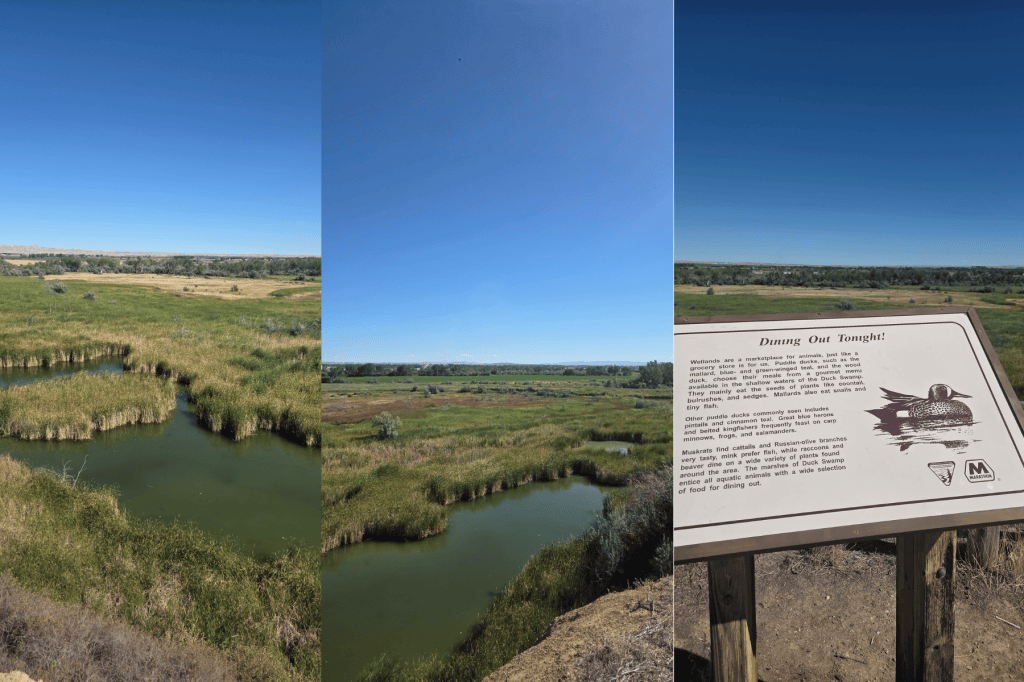
Wildlife to Watch For
Duck Swamp is one of the most accessible birdwatching locations near Worland. According to the Bureau of Land Management, wildlife found around the wetland may include:
- Dabbling ducks
- Songbirds
- Great blue herons
- Kingfishers
- Hawks
- Owls
- Muskrats
- Mink
- Beavers
Wildlife sightings vary by season and time of day. Spring and early summer bring increased bird activity, while autumn can provide opportunities to see migrating waterfowl. Early morning and evening are often the best times to visit, when temperatures are cooler and animals are more active.
Binoculars are strongly recommended. A camera with a zoom lens can also help visitors observe animals without approaching or disturbing them.
Directions from Worland
From Worland, travel north on Wyoming Highway 433 for approximately three miles. Watch for the entrance to the Duck Swamp Interpretive Area. Be aware that it is possible to encounter rattlesnakes in the area so keep an eye and ear out.
The developed day-use area provides parking for cars and buses. Because the destination is close to town and reached by highway, visitors do not need a high-clearance or four-wheel-drive vehicle under normal conditions.
When to Visit
Duck Swamp can be enjoyable throughout much of the year, but each season offers a different experience.
Spring brings returning birds, greener vegetation and increased activity around the marsh. Portions of the trail may be wet or muddy after storms.
Summer offers long days and good wildlife-viewing opportunities, but afternoons can become hot. Visit early or late in the day and bring sun protection.
Fall usually provides cooler walking weather and the chance to observe migrating birds.
Winter can bring snow, ice and cold winds. Check local conditions before visiting, as facilities or trail maintenance may be limited outside the warmer months.
What to Bring
Although this is a short and developed trail, a few basic items will improve the experience:
- Walking shoes with good traction
- Water
- Sunscreen and a hat
- Insect repellent during warmer months
- Binoculars
- A camera
- An extra layer for changing weather
Stay on the established routes and avoid entering the marsh or approaching wildlife. If bringing a dog, keep it controlled and away from birds and other animals.
Make It a Picnic Outing
Duck Swamp is also a convenient place for an outdoor meal. Covered picnic tables and barbecue facilities are available for day use, allowing visitors to combine the interpretive walk with lunch or a small family gathering.
The developed amenities make the area particularly useful for families, school groups and travelers looking for an easy place to stretch their legs near Worland. Visitors planning to use a grill should check current fire restrictions before their trip.
A Quiet Side of the Bighorn Basin
The Bighorn Basin is known for badlands, mountains and wide-open desert scenery, but Duck Swamp reveals a quieter side of the region. Its marsh, open water and riverside vegetation support a surprisingly diverse collection of animals within minutes of downtown Worland.
This is not a hike defined by distance or dramatic elevation. Its appeal comes from slowing down, watching the reeds for movement and discovering how much life can gather around a small patch of water in Wyoming’s high desert.
 Bighorn Basin Explorer
Leave a comment